By Coach Darshi
As a swim coach and someone who has spent over 14 years supporting children with diverse learning and developmental needs, I have come to understand one powerful truth:
Every child experiences the world differently, and water can either feel overwhelming or incredibly freeing, depending on how we introduce it.
At Swimin12, we believe that learning how to swim is not just about technique. It is about trust, regulation, safety, and connection.
Meeting Every Swimmer Where They Are
One of the most important lessons I have learnt over the years is this:
How a swimmer experiences the water shapes how they learn to swim.
Some of my students are neurotypical children learning basic strokes. Others are neurodivergent individuals navigating sensory sensitivities, communication differences, or emotional regulation challenges. Some are adults stepping into the water for the very first time.
As coaches, our role is not to force a swimmer into a fixed method.
Our role is to adapt to the individual, their pace, their needs, and their comfort level.
This adaptability is what defines Swimin12 coaches.
A Moment I Will Never Forget
Several years ago, I worked with a young boy on the autism spectrum who was non-verbal at the time.
In school, he was often described as difficult to manage. When overwhelmed, he would withdraw, lie at the back of the class, or express his distress through shouting, pinching, or kicking. Many adults around him felt unsure on how to support him.
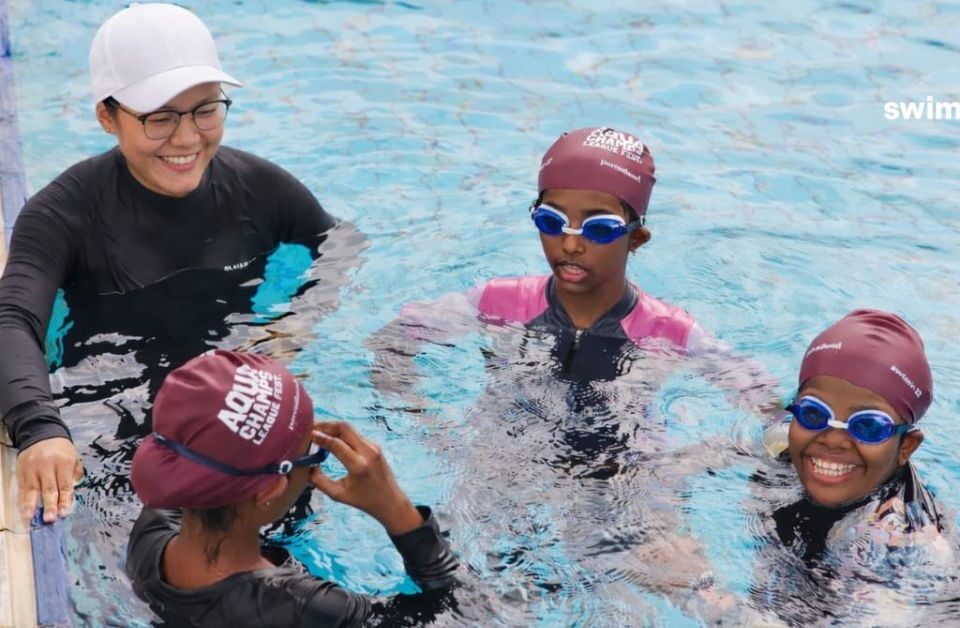
When we first met in the pool, I did not begin with swimming techniques or structured lessons.
Instead, we began with something much simpler, by being present.
I sat beside him gently.
We explored the water together, gently and without expectation.
I showed him, slowly, that he could choose how he experienced the water, that it would not overwhelm him unless he allowed it to. We focused on breathing, small movements, and building a sense of control. There was no urgency to “perform”. Only space to feel safe.
Over time, I began to notice small but meaningful changes.
Then one day, something remarkable happened.
Instead of reacting in distress, he pointed towards the pool and said clearly:
"I swim now".
It was more than just a sentence. It was a moment of trust.
A sign of safety.
A child recognising that he had control over his body and his movement.
To many, those three words may seem simple.
But in that moment, they represented something profound. A connection, regulation, and a breakthrough that went far beyond the water.
Why Water Can Be a Powerful Therapeutic Space
For many neurodivergent individuals, water offers something unique that land-based environments often cannot.
Water provides:
- Deep pressure input, which can be calming for the nervous system
- Reduced sensory overload, compared to noisy or visually busy environments
- Freedom of movement, without the constraints of gravity
- A natural rhythm, helping regular breathing and body awareness
This is why learning how to swim can be especially meaningful for neurodivergent children and adults.
It is not just about staying afloat.
It is about learning how to regulate, how to feel safe, and how to connect with one's own body.
Can Neurodivergent Individuals Learn How to Swim?
This is a question I hear often from parents:
"Can my child really learn how to swim?"
The answer is yes.
But the approach must be different.
At Swimin12, we focus on:
- Building trust before technique
- Using clear, simple communication methods
- Creating predictable routines to reduce anxiety
- Allowing time and space for sensory adjustment
We do not rush progress.
Because when a swimmer feels safe, progress naturally follows.
Why Water Safety is Critical for Neurodivergent Children
Water safety is important for every child.
But for neurodivergent children, it is especially critical.
Many neurodivergent individuals are naturally drawn to water due to its sensory appeal — the movement, the sound, the feeling.
At the same time, they may:
- Have limited awareness of danger
- Struggle with impulse control
- Not recognising unsafe situations
This combination increases the risk around water environments.
That is why learning how to swim is not optional.
It is a life-saving skill.
At Swimin12, we prioritise:
- Water familiarisation
- Safe entry and exit
- Breath control
- Floating and self-rescue skills
These are not just swimming skills. They are essential safety foundations.
Why It Matters: Building Confidence, Safety, and Independence
When a child says, "I swim now", it is not just about swimming.
It is about:
- Feeling safe in their own body
- Gaining confidence in unfamiliar environments
- Learning to regulate emotions
- Developing independence
- Reducing real-life risks around water
Learning how to swim is one of the few life skills that combines physical safety, emotional regulation, and personal growth.
For neurodivergent individuals, it can be even more powerful.
Because sometimes, the pool is the first place where they truly feel in control.
And that is where real progress begins.